Kool-Pads® Thermal Interface Materials

Thermal Interface Materials, Gap Fillers & Electrical Insulators

Kool-Pads® thermal interface materials help move heat from electronic components into heatsinks, chassis and other heat-spreading structures while meeting the electrical, mechanical and assembly requirements of the application.

Wavetame supplies electrically isolating pads, soft gap fillers, conductive graphite interfaces, phase-change materials, ceramic insulators, shielded thermal insulators, compounds, adhesives and thermal bonding tapes in standard and custom formats.

KTG • KF • CM20 • KFL • ZAO • KPS • TCC • TCT
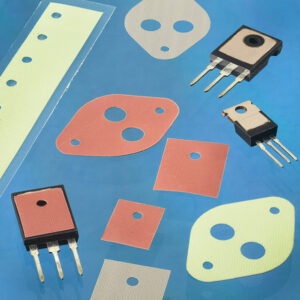
Kool-Pads KTG electrically isolating thermal interface pads
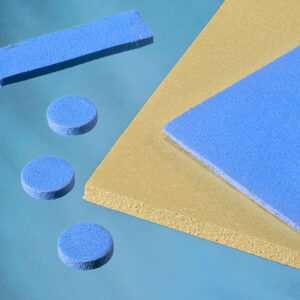
Kool-Pads KF soft thermal gap filler materials
Managing the Thermal Interface

What Does a Thermal Interface Material Actually Do?

Even apparently flat metal and component surfaces contain microscopic roughness and air gaps. Because air is a poor thermal conductor, those voids increase the thermal resistance between the heat-generating device and the heatsink or chassis.

A thermal interface material fills those voids and improves contact across the joint. The best material is not necessarily the one with the highest published thermal conductivity: bond-line thickness, conformity, pressure, electrical isolation and surface flatness all affect real interface performance.

Wavetame supports sheet materials, standard package outlines and customer-specific converted parts across the established Kool-Pads® range.

Electrical Isolation Insulating pads, ceramic interfaces and shielded insulator constructions.
Gap Filling Soft conformable materials for larger gaps and dimensional variation.
Custom Conversion Standard outlines, sheets and custom components to customer drawing.

A thermal interface must be selected around:

  • Whether electrical isolation is required.
  • Actual gap or interface thickness.
  • Surface flatness and dimensional tolerance.
  • Available clamping pressure.
  • Required thermal performance.
  • Assembly, rework and production method.
  • Operating temperature and environment.
  • Device package and mounting geometry.
Kool-Pads® Material Families

Choose the Interface by What the Assembly Needs

The Kool-Pads® range covers several fundamentally different interface technologies. Start with the electrical and mechanical requirement, then narrow the choice by thermal performance.

Electrically Isolating

Kool-Pads® KTG

Dry thermally conductive electrical insulators for device-to-heatsink interfaces, available in sheet, standard package outlines and custom-cut components.

KTG provides the current replacement route for several historic Warth Kool-Pads® grades including K177, K228, K230 and K381.

Gap Filling

Kool-Pads® KF

Soft, conformable thermal gap-filling materials for larger gaps, uneven surfaces and assemblies where a thin interface pad cannot maintain reliable contact.

Established KF options span approximately 0.25–5.0 mm thickness and around 1–6 W/m·K thermal conductivity.

Electrically Conductive

Kool-Pads® CM20

Compressed graphite thermal interface material for applications where electrical isolation is not required and strong thermal performance is the priority.

Good planarity between the device and heatsink is important because CM20 is not intended to bridge large mechanical gaps.

Low Clamping Force

Kool-Pads® KFL

Phase-change interface materials for applications where very low device clamping force is available.

Electrically isolating and non-isolating constructions are available, with heat used after assembly to reflow the active material into the interface.

Ceramic Isolation

Kool-Pads® ZAO

Aluminium oxide ceramic insulators for applications requiring high electrical isolation, controlled creepage or reduced parasitic capacitance compared with conventional silicone / glass-fibre pads.

Shielded Isolation

Kool-Pads® KPS

Thermally conductive electrical insulators incorporating a copper foil shield that can be grounded where parasitic capacitance is a concern.

Compounds & Adhesives

Kool-Pads® TCC

Thermally conductive compounds, thermal pastes and adhesives for applications where a paste, grease or bonded interface is more appropriate than a dry cut pad.

Dry Bonding

Kool-Pads® TCT

Thermally conductive dry bonding tapes for applications including LEDs, heatsinks and other assemblies requiring attachment and heat transfer in the same interface.

Selection Framework

Six Questions Before Comparing Thermal Conductivity

Published W/m·K is useful, but it should come after the basic electrical, mechanical and assembly requirements have been defined.

01 / Electrical

Is Isolation Required?

Decide whether the device must remain electrically isolated from the heatsink or chassis before considering conductive materials such as graphite.

02 / Geometry

How Large Is the Gap?

Thin interface pads suit close, relatively flat surfaces. Larger gaps and tolerance stack-up usually need a compliant gap-filling material.

03 / Pressure

How Much Clamping Force Is Available?

Contact pressure affects conformity and thermal resistance. Some materials are designed specifically for low-force assemblies.

04 / Surface

How Flat Are the Interfaces?

Rigid or thin materials need good surface contact, while softer pads can accommodate greater variation.

05 / Thermal

What Performance Is Actually Required?

Consider total interface resistance, thickness and contact quality rather than comparing conductivity figures in isolation.

06 / Assembly

How Will the Part Be Built?

Adhesive, rework, package geometry, handling, automation and production method can all make one interface technology more practical than another.

Kool-Pads® KTG

Electrically Isolating Thermal Interface Pads

KTG provides a dry thermally conductive interface between a heat-generating component and its heatsink while maintaining electrical isolation between the two surfaces.

The established KTG range is available in sheet, standard package outlines and custom-cut parts, with pressure-sensitive adhesive on one side available as an assembly aid where appropriate.

Electrical Isolation Dry thermally conductive interface designed to isolate device from heatsink.
Thickness Range Established KTG options span approximately 0.15 mm to 0.5 mm.
Custom Conversion Sheet, standard package outlines and customer-specific cut parts.
Legacy Replacement Route Current options for historic K177, K228, K230 and K381 requirements.
Legacy Kool-Pads® TIMs

K177, K228, K230, K381 & K200

Older Warth International drawings and approved parts lists may specify K177, K200, K228, K230 or K381 rather than the current KTG family.

Wavetame identifies KTG as the replacement route for K177, K228, K230 and K381. Historic K200 requirements should be reviewed individually rather than automatically substituted.

Legacy mapping

  • K177 → review current KTG option.
  • K228 → review current KTG option.
  • K230 → review current KTG option.
  • K381 → review current KTG option.
  • K200 → contact Wavetame to review the exact requirement.
Kool-Pads® KF

Soft Thermal Gap Fillers

KF gap fillers are soft, conformable thermal materials designed to bridge larger gaps and accommodate surface variation where a conventional thin interface pad cannot maintain reliable contact.

The established KF range covers a wide spread of hardness, thickness and thermal-performance options, allowing the material to be selected around the gap and available compression rather than thickness alone.

Thickness Range Established KF options span approximately 0.25 mm to 5.0 mm.
Thermal Conductivity Established options span approximately 1.0 to 6.0 W/m·K.
Conformability Soft materials accommodate surface variation and dimensional tolerance.
Custom Formats Available in sheet, standard outlines and custom-cut parts.

Do not choose a gap filler by thickness alone

  • Nominal and worst-case gap.
  • Material hardness / softness.
  • Required compression percentage.
  • Force transferred into the component or PCB.
  • Thermal conductivity and final compressed thickness.
  • Part tolerance and expected assembly variation.
Gap-Filler Selection

Soft Enough to Conform — Firm Enough to Stay Controlled

A gap filler must deform enough to make contact across the complete thermal interface without applying excessive mechanical load to the component, board or enclosure.

The correct KF grade therefore depends on gap size, hardness, conformity, required thermal performance and the amount of compression the finished assembly can safely apply.

Kool-Pads® CM20

Compressed Graphite for Conductive Thermal Interfaces

CM20 is a compressed graphite interface material for applications where electrical isolation is not required and strong thermal performance at a commercially practical cost is the main requirement.

Good planarity between the device and heatsink is essential. Graphite is not a substitute for a soft gap filler where the surfaces are widely spaced or significantly uneven.

CM20 can be supplied as sheet, standard outlines or custom-cut parts, with or without pressure-sensitive adhesive on one side as an assembly aid.

CM20 is electrically conductive

Do not use a graphite interface where the device must be electrically isolated from the heatsink or chassis unless the complete assembly provides the required isolation by another controlled method.

Kool-Pads® KFL

Phase-Change Interfaces for Low-Clamping-Force Assemblies

KFL phase-change materials are intended for applications where very low device clamping forces make a conventional dry pad difficult to optimise.

After assembly, heat causes the active interface material to reflow and displace air from the contact surfaces. Electrically isolating and non-isolating constructions are available.

Low Clamping Force Useful where the assembly cannot apply strong continuous mounting pressure.
Reflow Behaviour Heat after assembly allows the active material to flow into the interface.
Isolation Options Electrically isolating and non-isolating constructions are available.
Specialist Electrical Isolation

ZAO Ceramic Insulators & KPS Shielded Insulators

Kool-Pads® ZAO

ZAO aluminium oxide ceramic insulators provide a rigid electrically insulating thermal path for applications requiring high isolation, creepage control or reduced parasitic capacitance.

  • Aluminium oxide ceramic construction.
  • Standard package outlines available.
  • Useful where rigid high-integrity insulation is required.
  • Suitable for applications where silicone / glass-fibre pad capacitance is undesirable.

Kool-Pads® KPS

KPS provides an electrically insulating thermal interface with a copper foil layer incorporated into the construction so the shield can be grounded where parasitic capacitance is a concern.

  • Thermal interface plus electrical isolation.
  • Groundable copper foil shield.
  • Standard power-package outlines available.
  • Custom designs can be reviewed for specialist requirements.
Compounds, Adhesives & Dry Bonding

Kool-Pads® TCC & TCT

Not every thermal interface is best handled with a pre-cut pad. Compounds, adhesives and bonding tapes offer alternative routes where filling, attachment or very thin bond lines are part of the assembly requirement.

Kool-Pads® TCC

The TCC family covers thermally conductive compounds, thermal pastes and adhesives.

  • Thermal compounds and pastes for conformal interfaces.
  • Thermally conductive adhesive options.
  • Useful where a paste or bonded interface suits the assembly better than a dry pad.
  • Grade-specific cure, electrical and thermal properties should be checked before selection.

Kool-Pads® TCT

TCT covers thermally conductive dry bonding tapes for assemblies that need attachment and heat transfer through the same interface.

  • Dry adhesive interface.
  • Applications include LEDs and heatsinks.
  • Useful where mechanical fastening is undesirable or impractical.
  • Surface preparation and long-term adhesion remain important design factors.
Material Comparison

Which Kool-Pads® Interface Family Should I Consider?

Requirement Typical Kool-Pads® route Key design consideration
Thin dry interface with electrical isolation KTG Flatness, clamping pressure, insulation requirement and finished thickness.
Larger gap or significant surface variation KF Gap, hardness, compression force and tolerance stack-up.
High thermal performance with no electrical isolation CM20 Good surface planarity and controlled electrical contact.
Very low device clamping force KFL Phase-change behaviour, reflow process and isolation requirement.
Rigid high-integrity electrical insulation ZAO Package geometry, ceramic handling and mechanical stack-up.
Electrical isolation with grounded shield layer KPS Shield grounding arrangement and parasitic-capacitance requirement.
Paste, grease or thermally conductive adhesive TCC Bond-line control, cure, rework and grade-specific properties.
Thin dry bonded thermal interface TCT Adhesion, surface preparation and mechanical retention requirement.
Thermal Performance

Do Not Choose a TIM by W/m·K Alone

Thermal conductivity describes the material itself. The actual interface performance also depends on how thick the material is in the finished assembly, how well it conforms to both surfaces and how much contact resistance remains at each side of the interface.

A thinner, well-compressed material with a lower nominal conductivity can sometimes outperform a thicker high-conductivity material if the complete thermal resistance through the joint is lower.

Material Conductivity Useful, but only one part of the interface calculation.
Bond-Line Thickness More material in the thermal path generally increases resistance through the interface.
Contact Quality Conformity and pressure determine how effectively microscopic air gaps are displaced.
Electrical Requirement The thermally best material may be unusable if the assembly also requires electrical isolation.
Converted Thermal Components

Sheet, Standard Package Outlines & Custom-Cut Parts

Much of Wavetame’s thermal-interface work is manufactured to drawing rather than supplied only as standard catalogue shapes.

Materials can be converted into common power-device outlines or customer- specific geometries, allowing cut-outs, mounting holes and overall component shape to match the actual heatsink and device assembly.

Useful drawing information

  • Finished outline and tolerances.
  • Mounting-hole positions and diameters.
  • Required material family or performance requirement.
  • Device and heatsink interface dimensions.
  • Electrical-isolation requirement.
  • Pressure-sensitive adhesive requirement.
  • Prototype or repeat-production quantity.

The interface material is only part of the assembly

  • TSC transistor mounting clips apply controlled central clamping force.
  • BQ insulating bushes electrically isolate mounting hardware from live device tabs.
  • Thermaflex tubes provide electrical isolation around selected power-device packages.
  • Mounting geometry affects both electrical safety and thermal contact.
Thermal Hardware

Mounting Pressure & Electrical Isolation Work with the TIM

A good interface material cannot compensate for poor mounting. Device pressure, fastener position and electrical isolation hardware all affect how the finished thermal joint performs.

Wavetame’s Kool-Pads® hardware range includes TSC transistor clips, BQ insulating bushes and supporting isolation components for common power semiconductor packages.

Legacy Kool-Pads® Support

Still Using a Warth International Thermal Part?

Existing drawings, approved parts lists and historic purchasing records may contain older Kool-Pads® designations or customer-specific Warth International thermal components.

Send Wavetame the original part number, drawing, datasheet or physical sample. We can review the requirement against retained product knowledge and current thermal-interface options.

Historic Grades K177, K200, K228, K230, K381 and other established Kool-Pads® references.
Customer-Specific Parts Old custom outlines can be reviewed from drawings, samples or purchase history.
Current Alternatives Modern materials can be considered where the original grade has changed or is no longer suitable.
Related Information

Continue Exploring Kool-Pads® Thermal Management

Engineering Guide

How to Choose a Thermal Interface Material

Understand electrical isolation, gap filling, clamping pressure, thermal conductivity and bond-line thickness.

Read the Guide
Product Family

Thermal Hardware & Components

Explore TSC mounting clips, BQ insulating bushes and supporting thermal-management hardware.

Explore Thermal Hardware
Legacy Brand Index

Kool-Pads® Legacy Products

Find historic Warth International Kool-Pads® families and their current Wavetame support routes.

View Kool-Pads® Legacy Index
Need a Thermal Interface Material?

Send Us the Device, Gap, Drawing or Legacy Reference

Tell us whether electrical isolation is required, the expected gap or interface thickness, available mounting pressure and any known thermal constraints. Wavetame can help identify a suitable Kool-Pads® material and manufacturing route.